Can IV Hydration Help With Headaches and Fatigue? Here's What the Science Says
If you've ever dealt with a pounding headache layered on top of bone-deep exhaustion, you know how desperate the search for relief can feel. You've tried water, coffee, ibuprofen, a dark room — and nothing quite does the job.
That's why IV hydration for headaches and fatigue has exploded in popularity. Walk-in wellness clinics, med spas, and mobile IV services now offer drip treatments that promise fast relief by delivering fluids, vitamins, and minerals straight into your bloodstream.
But does the science actually back it up? Let's look at what the research says — what works, what doesn't, and when IV therapy might genuinely be worth considering.

How Dehydration Triggers Headaches and Fatigue
Before we talk about the treatment, it helps to understand the problem.
What Happens When You're Dehydrated
When your body loses more fluid than it takes in, blood volume drops. That means less oxygen reaches your brain. The result? Your brain's pain receptors activate, and a dull ache — or a full-blown headache — sets in.
It doesn't take much. Losing just 1–2% of your body weight in water can impair concentration, slow reaction time, and drain your energy. When key electrolytes like sodium, potassium, and magnesium fall out of balance, those symptoms get worse.
The Dehydration-Migraine Connection
Roughly one in three migraine sufferers identifies dehydration as a direct trigger. And migraines rarely travel alone — chronic migraine patients consistently report higher levels of fatigue compared to people with occasional headaches.
That overlap is important. If dehydration is fueling both your headaches and your fatigue, a treatment that addresses hydration at the cellular level starts to make a lot of sense.
What Is IV Hydration Therapy — and What's in the Bag?
The Basics
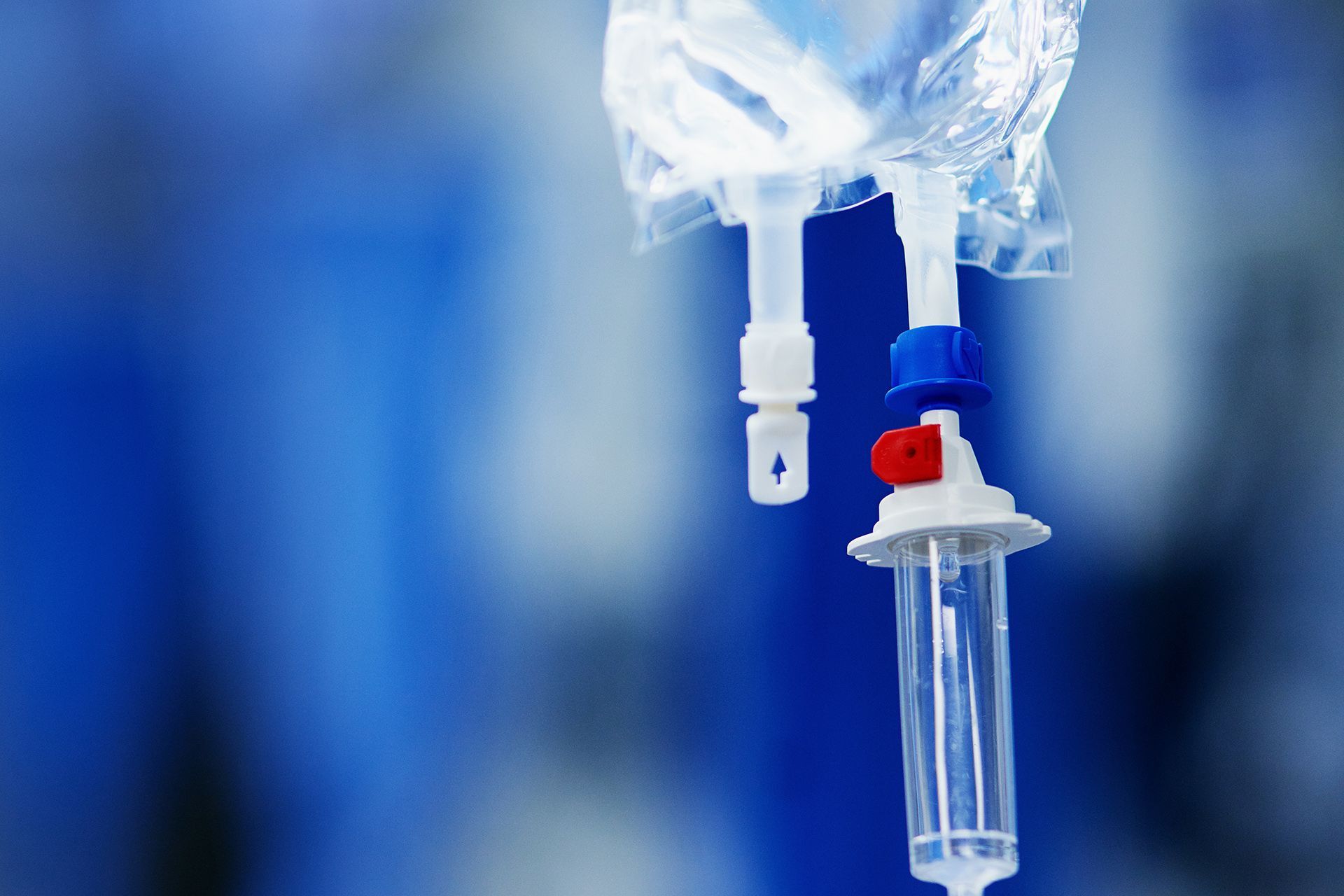
IV hydration therapy delivers fluids directly into your bloodstream through a small catheter, typically placed in your arm. The foundation is usually normal saline — a sterile saltwater solution that matches your body's natural chemistry.
Because it bypasses your digestive system entirely, absorption is immediate. That's a meaningful advantage during a migraine attack, when nausea can make it nearly impossible to keep anything down. Most sessions take about 30 to 45 minutes.
Common Ingredients in a Headache and Fatigue IV Drip
Not all IV bags are the same. Depending on the provider and your symptoms, a drip formulated for headaches and fatigue may include:
- Magnesium sulfate, which supports nerve function and has the most clinical research behind it for migraine relief
- B vitamins (B-complex and B12), which play a central role in energy metabolism
- Vitamin C, which has antioxidant and anti-inflammatory properties
- Electrolytes to restore hydration balance at the cellular level
- Anti-nausea or pain medications in clinical settings, such as ondansetron or ketorolac
You may also hear providers reference the Myers' Cocktail — a well-known IV formulation combining magnesium, calcium, B vitamins, and vitamin C that's been used for decades in integrative medicine.
What Does the Research Say About IV Hydration for Headaches?
This is where things get interesting. The evidence is a mixed bag, but certain findings stand out.
IV Magnesium for Acute Migraine Attacks
Magnesium is the star player in the research. A meta-analysis of 21 randomized controlled trials — covering nearly 950 participants — found that IV magnesium significantly relieved acute migraine symptoms within 15 to 45 minutes, at 2 hours, and at 24 hours after infusion.
In a separate prospective, double-blind trial known as the MAGraine study, IV magnesium performed comparably to two standard emergency department medications (prochlorperazine and metoclopramide) for reducing migraine pain at 30, 60, and 120 minutes. Notably, magnesium also carried fewer adverse effects.
A large retrospective study from the University of Southern California's outpatient infusion center found that more than half of 234 migraine patients experienced clinically meaningful pain reduction — defined as a 30% or greater decrease — after IV magnesium alone, without needing additional pain medications.
The evidence is strongest for migraines with aura specifically, where magnesium appears to be most effective.
IV Fluids Alone — Do They Help?
Here's an important distinction. A post hoc analysis found that adding IV saline alone to standard migraine medications did not significantly improve pain outcomes compared to medication without fluids. Saline by itself isn't a migraine treatment. But when dehydration is actively contributing to your symptoms, restoring fluid balance can make a real difference — especially for tension-type dehydration headaches, where rehydration is the primary intervention.
Where the Evidence Has Gaps
Most clinical studies have been conducted in emergency departments, not wellness clinics. There's limited research on the specific consumer-facing "wellness drip" formulations, and we lack large-scale trials comparing IV hydration to simple oral rehydration for headaches. The evidence supports specific components — particularly magnesium — but the broader marketing claims from some IV brands outpace what the data confirms.
Can IV Therapy Help With Fatigue?
What the Science Supports
IV therapy has clear clinical value when fatigue stems from a documented cause — dehydration, B12 deficiency, iron deficiency, or the aftermath of illness or surgery. In those cases, delivering nutrients directly to the bloodstream can restore energy more quickly than oral supplementation.
Many people also report subjective improvements in energy and mental clarity after vitamin-infused IV treatments, particularly when recovering from prolonged physical depletion or poor nutrient absorption.
Where the Evidence Falls Short
For otherwise healthy individuals with normal hydration and nutrition, the benefit of IV therapy for fatigue is likely modest. A 2025 review published in the PMC noted that IV vitamin therapy is increasingly marketed for fatigue and general wellness, despite limited scientific evidence supporting elective use in healthy people.
It's also worth acknowledging the role of placebo. The experience of receiving a clinical treatment — the IV line, the quiet chair, the dedicated rest time — can influence how energized you feel afterward. That's not nothing, but it's not the same as a pharmacological effect.
For most people, improving daily hydration, sleep quality, and nutrition will go further than an occasional drip.
IV Hydration vs. Oral Hydration: When Does IV Actually Make Sense?
Not every headache or bout of fatigue calls for an IV. Here's a practical way to think about it.
IV therapy may be the better choice when you're actively vomiting and can't keep fluids down during a migraine attack, you're acutely dehydrated and need rapid fluid replacement, you have documented malabsorption issues, or you're recovering from illness or surgery and need fast nutrient replenishment.
Oral hydration is likely sufficient when you're dealing with a mild to moderate dehydration headache, your fatigue isn't linked to a specific deficiency, or you're looking for general wellness maintenance. In those cases, consistent water intake, electrolyte-rich foods, adequate sleep, and a balanced diet will typically deliver meaningful results — without the cost or risks of IV therapy.
Risks and Side Effects to Know About
IV hydration therapy is generally safe when administered by licensed professionals, but it's not risk-free.
Potential complications include infection at the needle site, bruising, vein inflammation, and allergic reactions to ingredients in the drip. Fluid overload is a more serious concern for people with heart or kidney conditions, and improperly dosed formulations can cause electrolyte imbalances.
Before booking a session, disclose your full medical history and any medications you're taking. And remember: IV therapy should complement proper medical evaluation, not replace it. If you're dealing with chronic or worsening headaches or fatigue, see your doctor first.
The Bottom Line
So, can IV hydration help with headaches and fatigue? The honest answer: it depends on the cause.
IV magnesium has the strongest clinical evidence, especially for acute migraine attacks with aura. IV fluids can provide meaningful relief when dehydration is a genuine contributing factor. And for fatigue tied to nutrient deficiency or illness recovery, IV therapy can fast-track the replenishment process.
But for everyday headaches or general tiredness in otherwise healthy people, the evidence for IV drips as a go-to solution is still thin. Good hydration habits, balanced nutrition, quality sleep, and stress management remain your most reliable first line of defense.
When those foundations are in place and you still need a boost — or when a migraine has you unable to keep water down — IV therapy can be a powerful tool in your corner.
Frequently Asked Questions
Does IV hydration help with migraines?
IV hydration that includes magnesium has shown clinical promise for acute migraine relief, especially migraines with aura. A meta-analysis found IV magnesium significantly reduced symptoms within 15 to 45 minutes. However, IV saline alone has not been shown to improve outcomes beyond standard medication.
How fast does IV hydration work for headaches?
Most people begin feeling relief within 30 to 45 minutes. Studies on IV magnesium show measurable pain reduction at 30 minutes, with continued improvement at 60 and 120 minutes.
Can IV therapy cure chronic fatigue?
No. IV therapy may help when fatigue stems from dehydration or a nutrient deficiency, but evidence supporting IV drips for chronic fatigue in healthy individuals is limited. Persistent fatigue warrants a medical evaluation.
Is IV hydration better than drinking water for headaches?
For mild dehydration headaches, water with electrolytes is usually effective. IV hydration has a clear advantage when nausea prevents you from keeping fluids down or when rapid rehydration is medically necessary.
What is in a migraine IV drip?
A typical migraine drip includes normal saline, magnesium sulfate, B vitamins, and vitamin C. Clinical settings may add anti-nausea medications and pain relievers like ketorolac. Formulations vary by provider.
Are there risks to IV hydration therapy?
Yes. Risks include infection, bruising, vein irritation, allergic reactions, and fluid overload. People with heart or kidney conditions face higher risk. Always use a licensed healthcare professional.
Ready to Feel Better, Faster?
If headaches and fatigue are slowing you down, you don't have to white-knuckle your way through the day. Book a mobile IV hydration session and get science-backed relief delivered right to your door — no waiting rooms, no hassle. Our licensed professionals will customize your drip to target exactly what your body needs.
Boost energy and mental clarity with mobile NAD+ IV therapy in Scottsdale. Direct-to-home service with certified specialists. Schedule your infusion today.
Mobile IV therapy for immunity boost in Gilbert delivers nutrients directly to your bloodstream. Schedule certified in-home infusions for faster immune support.
Transform your beauty with mobile IV therapy in Chandler. Hydration, anti-aging, and glow delivered to your home. Book your appointment today.
Get fast migraine relief in Phoenix with mobile IV therapy. Treatment comes to you in 15-30 minutes. Book same-day appointments online now.
Discover Myers Cocktail IV therapy in Mesa. Learn how mobile IV wellness works, benefits, and why locals choose convenient at-home treatment.
Fast athletic recovery in Mesa with mobile IV therapy. Get hydration, amino acids & electrolytes delivered to you. Book your recovery drip today.
Get IV hydration therapy delivered to your Mesa home or office. Fast recovery, peak performance, and immediate results from certified mobile IV professionals.
Mobile IV therapy for hangovers in Mesa. Feel better in 30-60 minutes with professional hydration and electrolyte restoration. Book now at Premium IV Therapy.
Discover how mobile IV therapy for athletic performance in Mesa helps athletes recover faster, boost endurance, and optimize training results at home.
Discover how mobile IV therapy accelerates athletic recovery in Mesa. Learn benefits, how it works, and why athletes choose IV hydration therapy over traditional recovery methods.